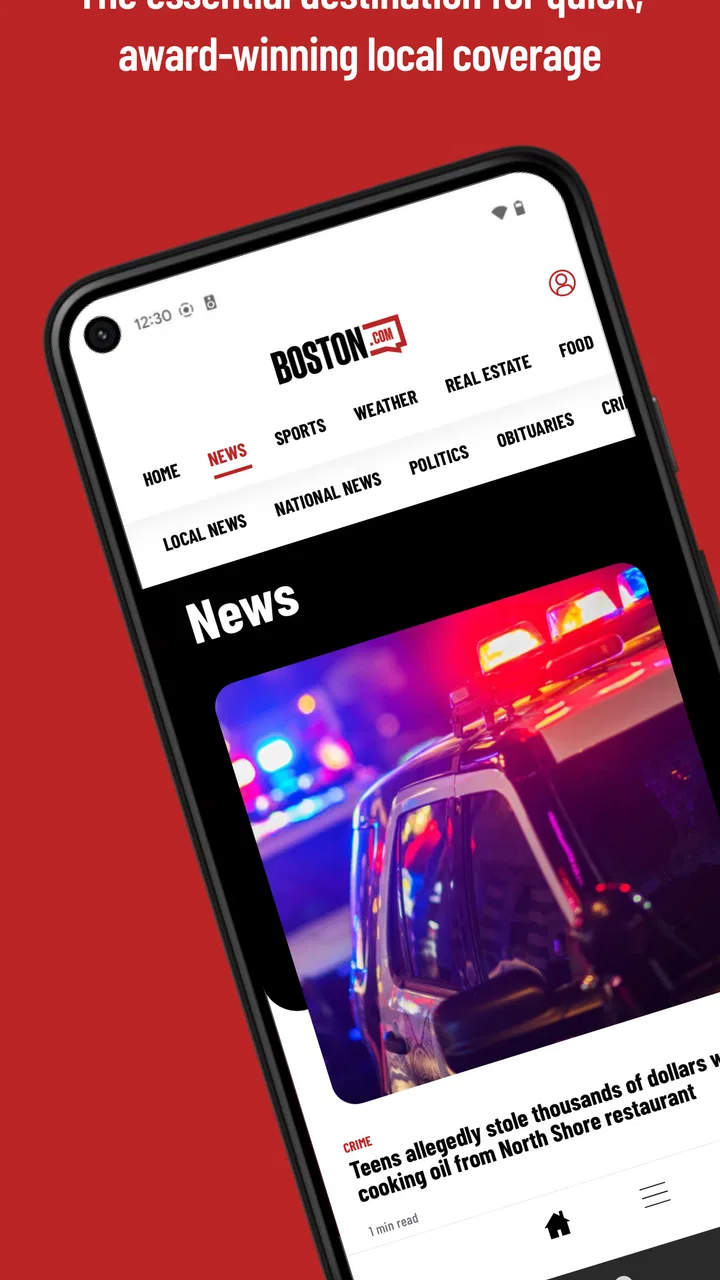
Boston.com
- 4.5
- Rating
- 50.00K
- Installs
- Free
- Price

 Analysis by App-foxy
Boston.com is the kind of news app I open when I want a local view rather than a broad national feed. It focuses on the Boston area and gives everyday stories, updates, and magazine-style reading a home on a phone. After spending time with it, I see its main value in convenience: it brings the Boston.com experience into a compact format that is easier to check during a commute, a lunch break, or a quiet moment at home.
What makes it worth considering is its clear local identity. Many general news apps can tell me what is happening across the country, but they do not always help me understand what people in Boston are discussing right now. This app is aimed at that gap. It is free, rated for Everyone, and belongs to the News & Magazines category, so it is accessible to a wide range of readers who want local coverage without committing to a paid download.
How Boston.com feels in everyday use
The first thing I notice with a local news app is not a flashy feature; it is how quickly I can reach something relevant. Boston.com has a straightforward purpose, and that helps. I do not need to turn it into a complicated personal information system. I can open it, scan the latest material, choose a story that catches my attention, and leave without spending much time managing the app itself.
You May Also Like

 Pandora - Music & Podcasts
Pandora’s Music Is Easy to Start, but Harder to Recover
Pandora’s strength is its low-effort path from a seed to a station. Its weak spot is how much confidence it asks you to place in connection, setup, and quiet recovery.

 8 Ball Pool
 Is Built on Rivalries, Rematches, and Routine
A close look at the rivalries, rematches, shared routines, and unanswered safety questions that turn a quick pool match into a persistent mobile community.

 Samsung Music
’s Quiet Strength Is Playing What You Already Own
Its reach comes less from spectacle than from dependable access to a personal library. That simplicity is both the app’s strongest retention engine and its ceiling.

 AccuWeather: Weather Radar
AccuWeather Review: A Quick, Clear Forecast for Everyday Decisions
For everyday plans, the best forecast is the one you can understand quickly. AccuWeather makes rain timing, radar, and local conditions easy to act on, with a few trade-offs.

 Hill Climb Racing
Why Hill Climb Racing Still Turns Crashes Into One More Run
A tiny car, a bumpy hill and one more upgrade: Hill Climb Racing keeps resurfacing because its simple chaos makes every near-miss feel personal.

 AliExpress - Shopping App
AliExpress Makes Global Shopping Feel Personal, but Shoppers Bear the Risk
AliExpress turns a global marketplace into a pocket-sized discovery engine. Its reach is useful, its shopping loop compelling, and its trade-offs easy to miss.
More From Our News Desk
View All News


That simplicity is especially useful in short sessions. If I have only a few minutes before a meeting, I can use the app as a quick local briefing. If I have more time, I can move from a headline into a longer article and read at a slower pace. This makes it more flexible than a notification-only news service, while still feeling lighter than a full desktop news site.
I would not describe it as a replacement for every source of information. Its strength is local context, not being a universal answer to world news, specialist reporting, or highly customized financial and technical coverage. I get the best experience when I treat it as one focused part of my daily reading rather than the only news product on my phone.
Speed expectations for quick reading
For a news app, perceived speed is largely about how soon I can begin reading. Boston.com benefits from having a focused purpose: I am entering it to see Boston-related content, not to configure a large collection of unrelated feeds. That makes the opening habit feel direct. The practical test is simple: when I have a spare minute, can I reach a useful headline without friction? This is where the app makes the most sense.
Reading speed also depends on the kind of session I am having. Scanning headlines is naturally faster than opening several full stories, and a reader who moves rapidly between articles will place more demand on the app and the connection. I would avoid judging it only by the first screen. The more meaningful question is whether the transition from browsing to reading remains comfortable during a normal local-news check.
One useful habit is to decide what I want before opening it. I might be checking city news, looking for a weekend idea, or catching up on a major local development. That small decision prevents aimless scrolling and makes the app feel more responsive because I am using it with a clear purpose. It is a simple tip, but it matters more here than chasing a perfectly curated feed.
The app is available in a current release identified as v5.12.19, and it requires Android 6.0 or later. That minimum requirement makes it relevant to a broad range of Android phones, including devices that are not recent. Still, compatibility and perceived speed are not the same thing. An older phone may open the app acceptably while taking longer when several stories are loaded or when the system is already busy.
What happens during heavier reading sessions
The most demanding use case is not opening one article. It is repeatedly moving through the app: checking the main feed, opening multiple stories, returning to the list, and continuing until I have built a fuller picture of the day. That pattern is common when a local event is developing and I want more than one angle. It is also the situation in which any news app can feel less effortless than it did during a quick glance.
My advice is to separate short checks from deep reading. For a quick update, I can browse and stop. For a longer session, I prefer opening only the stories that genuinely matter and giving each one enough time to load and read. This reduces unnecessary back-and-forth and makes the phone feel less busy. It also improves the quality of my attention; constantly jumping between headlines can make local coverage feel fragmented.
Boston.com is a better fit for readers who enjoy making their own choices than for people who want an aggressively automated stream. I can use the app as a starting point, identify the stories that affect my interests, and ignore the rest. The trade-off is that I may need to do more selecting myself. That is not a serious drawback for me, but someone expecting a highly personalized feed may prefer a larger news aggregator.
A practical workflow is to check it once for the broad picture, then return later only when I have a specific reason. For example, I might scan the local headlines in the morning, read one or two relevant pieces during the day, and use a longer evening session for features or topics I missed. This avoids treating every update as urgent and keeps the app from becoming a constant distraction.
Reliability and recovering from interruptions
Reliability matters more to me than visual polish in a news app. If I am halfway through a story when a call arrives, I want to be able to return without feeling that the whole reading session has been lost. The sensible way to use Boston.com is to expect ordinary mobile interruptions: switch away when needed, reopen it, and continue from the current state when possible. I would not build a critical emergency-information routine around any single app, but it works well as a regular local reading source.
Network conditions are another part of the experience. A news app can feel slow when the connection is weak, even if the application itself is functioning normally. If I am traveling through a poor-signal area, I avoid repeatedly refreshing the same screen. Instead, I wait for the connection to settle, read what has already loaded, or come back later. This is a small but useful distinction: not every delay is an app failure.
For important developing stories, I also like to compare the latest material with another trusted source. That is not a criticism specific to Boston.com; it is good practice with local news generally. The app is valuable for keeping me connected to Boston.com, but no single feed should be treated as the complete picture of a fast-moving event.
The app has been available since Apr 21, 2011, which gives it a long presence in the mobile news space. Its current version suggests continued maintenance, but I still judge reliability by how it fits my routine: whether I can open it, find relevant reading, return after an interruption, and carry on without unnecessary setup. For me, that everyday consistency is more important than a long list of extras.
Older phones, storage, and practical device limits
Because the minimum Android requirement is 6.0, Boston.com can suit people who keep a phone for several years instead of upgrading frequently. That is useful for a local news app, where the main expectation is dependable reading rather than demanding graphics. However, an older device may have less available memory, a slower processor, or limited storage. Those conditions can affect the overall feel even when the app itself is compatible.
I would keep some free storage available and close unusually demanding background tasks before blaming the app for sluggish behavior. A phone that is nearly full can make many applications feel less responsive. Battery condition matters too: a worn battery or aggressive power-saving setting may influence how quickly content appears after the app has been sitting unused.
Readers with very small screens may find long articles less comfortable than they are on a tablet or desktop browser. The phone format is convenient, but convenience does not always equal the best reading posture. If I plan to spend a long evening with several articles, I would rather use a larger display when available. The app is strongest for short and medium reading sessions, while a browser or larger device may be better for extended concentration.
People who are careful about mobile data should also develop a sensible routine. I would use it mainly when connected to a reliable network if I expected to browse extensively, and I would avoid repeatedly reopening stories just to check whether anything has changed. That approach is not a special feature; it is simply a way to keep news reading from becoming wasteful on a limited plan.
Who will get the most from it
Boston.com is a natural choice for Boston residents, former residents who still follow the area, students and workers with local ties, and visitors who want a stronger sense of what the city is discussing. It can also help someone who has recently moved to the area and wants a convenient way to become familiar with local concerns, events, and conversation.
I especially like it for people who already know they prefer local reporting to a general national feed. A broad aggregator may offer more subjects, but that variety can bury the information that matters most to someone living in Boston. This app gives the reader a narrower doorway, and that focus is its advantage.
It is less suitable for someone who wants one app to cover every country, specialist topic, or highly personalized interest. A national news app may be better for election coverage outside Massachusetts, while a dedicated weather tool may be more appropriate for minute-by-minute conditions. Someone seeking offline-first reading, extensive customization, or a powerful cross-publication search experience may also prefer a different option.
The free price lowers the barrier to trying it. I can install it without treating the decision like a subscription commitment, which is helpful when I am comparing it with a browser bookmark or another news reader. The app has an average rating of 4.5 from around eight hundred ratings, a positive signal that it works well for many people, though I would still decide based on my own preference for local coverage and mobile reading habits.
Small habits that improve the experience
My first recommendation is to use the app at natural decision points rather than checking it every few minutes. Morning, midday, and evening are enough for many readers. This creates a useful rhythm: I see what changed, choose what deserves attention, and avoid turning every headline into an interruption.
My second recommendation is to read beyond the first headline when a story affects a real plan. If I am deciding whether to travel across the city, attend an event, or change my schedule, I would open the full article instead of relying on the brief wording in a feed. Headlines are useful for discovery, but the article provides the context needed for a sensible decision.
My third tip is to keep the app alongside, not instead of, the tools I use for immediate practical information. Boston.com can help me understand a local issue or follow a developing story, while a dedicated service may be better for live transit details, severe weather alerts, or another time-sensitive need. Knowing that boundary makes the app more useful because I am asking it to do the job it is designed for.
For readers who switch between devices, I would also choose one main device for longer sessions. Moving constantly from phone to desktop can make it harder to remember which stories I have already read. Using the phone for discovery and a larger screen for deep reading is a sensible division, but it works best when I deliberately decide which device is handling each task.
My performance verdict
Boston.com succeeds because it keeps the focus on Boston and makes local reading easy to fit into an ordinary day. I find it most convincing as a quick, repeatable news check: open it, scan the local picture, choose a meaningful story, and move on. Its performance should be judged in that context rather than against resource-heavy entertainment apps or highly specialized news platforms.
The main trade-off is focus. A dedicated local app can feel more relevant than a general aggregator, but it will not satisfy someone who wants a complete world-news dashboard. Older phones may also deliver a less fluid experience than newer devices, and long reading sessions may be more comfortable in a browser or on a larger screen. Those are practical limits, not reasons to dismiss the app.
Boston.com is developed by Boston Globe Media Partners, LLC, and its Everyone rating makes it approachable for general readers. With over fifty thousand installs, it has found an audience beyond a small experiment, while the free access makes trying it straightforward. I would recommend it to anyone who wants a convenient local-news companion and understands that its value comes from Boston-specific focus.
My final recommendation is simple: choose Boston.com if local relevance matters more to you than having every possible news category in one feed. Skip it if your priority is global breadth, deep personalization, or specialized real-time tools. For my routine, it works best as a calm, focused way to stay connected with Boston rather than as a replacement for every other source of information.
FAQs for Boston.com
01What is Boston.com, and what can I use it for?
Boston.com is a local news and information app focused on the Boston area and surrounding New England communities. After exploring it, I found that it combines breaking news, local reporting, sports coverage, weather updates, entertainment, lifestyle articles, restaurant and event recommendations, and community-focused stories. It is useful for residents, commuters, students, and visitors who want a convenient way to follow what is happening in Boston from one place.
02Does the Boston.com app provide reliable and up-to-date local news?
The app is designed to deliver frequent updates on Boston news, including local politics, public safety, transportation, business, education, and major regional events. Articles generally include publication or update times, making it easier to identify recent developments. As with any news platform, readers should compare coverage with official sources during emergencies or developing stories, but Boston.com is a practical option for staying informed about daily events in the area.
03What other content is available besides news?
Boston.com offers considerably more than traditional headlines. During my review, the content included Boston sports coverage, weather information, restaurant and food recommendations, arts and entertainment, travel ideas, lifestyle features, event-related articles, and practical local guides. Sports fans may find the coverage especially useful, while visitors can use the app to discover things to do, places to eat, and seasonal activities around Boston and New England.
04Is Boston.com free to download and use?
Boston.com can generally be downloaded without an upfront charge, allowing users to browse its available content on a compatible Android or iOS device. However, some articles or features may be affected by advertising, registration requirements, or access limits depending on the publisher’s current policies. Before downloading, it is worth checking the app-store listing for the latest information about subscriptions, in-app purchases, account requirements, and any premium content restrictions.
05Does Boston.com require an account, and what privacy considerations should I know about?
You may be able to read some Boston.com content without creating an account, although registration can provide a more personalized experience, such as saved articles, newsletters, alerts, or tailored recommendations if those options are available. Because the app may collect information related to usage, device activity, advertising, or account preferences, review its current privacy policy and app-store disclosures before signing up. Privacy settings and notification permissions can usually be adjusted after installation.
Pros
- Reliable local news from Boston and surrounding communities.
- Useful coverage of weather
- traffic
- sports
- and local events.
- Clean layout makes articles easy to browse on mobile devices.
- Strong focus on Massachusetts politics and community issues.
- Event listings help users discover activities around Boston.
Cons
- Some articles may be limited to subscribers or require a subscription.
- Advertising can interrupt reading and make pages feel cluttered.
- Breaking-news notifications may become frequent for some users.
- Coverage is mainly regional
- offering limited national news depth.
- Some app features may depend on an active internet connection.

Boston.com
Gallery